Nuclear
Nuclear energy is energy in the core of an atom. Atoms are tiny particles in the molecules that make up gases, liquids and solids. Atoms themselves are made up of three particles called protons, neutrons and electrons. An atom has a nucleus (or core) containing protons and neutrons, surrounded by electrons. Protons carry a positive electrical charge, and electrons carry a negative electrical charge. Enormous energy is present in the bonds that hold the nucleus together. This nuclear energy can be released when those bonds are broken. The bonds can be broken through nuclear fusion or fission to generate electricity.
In nuclear fission, atoms are split apart, which releases energy. All nuclear power plants use nuclear fission, and most nuclear power plants use uranium atoms. During nuclear fission, a neutron collides with a uranium atom and splits it, releasing a large amount of energy in the form of heat and radiation. More neutrons are also released when a uranium atom splits. These neutrons continue to collide with other uranium atoms, and the process repeats itself over and over again. This process is called a nuclear chain reaction.
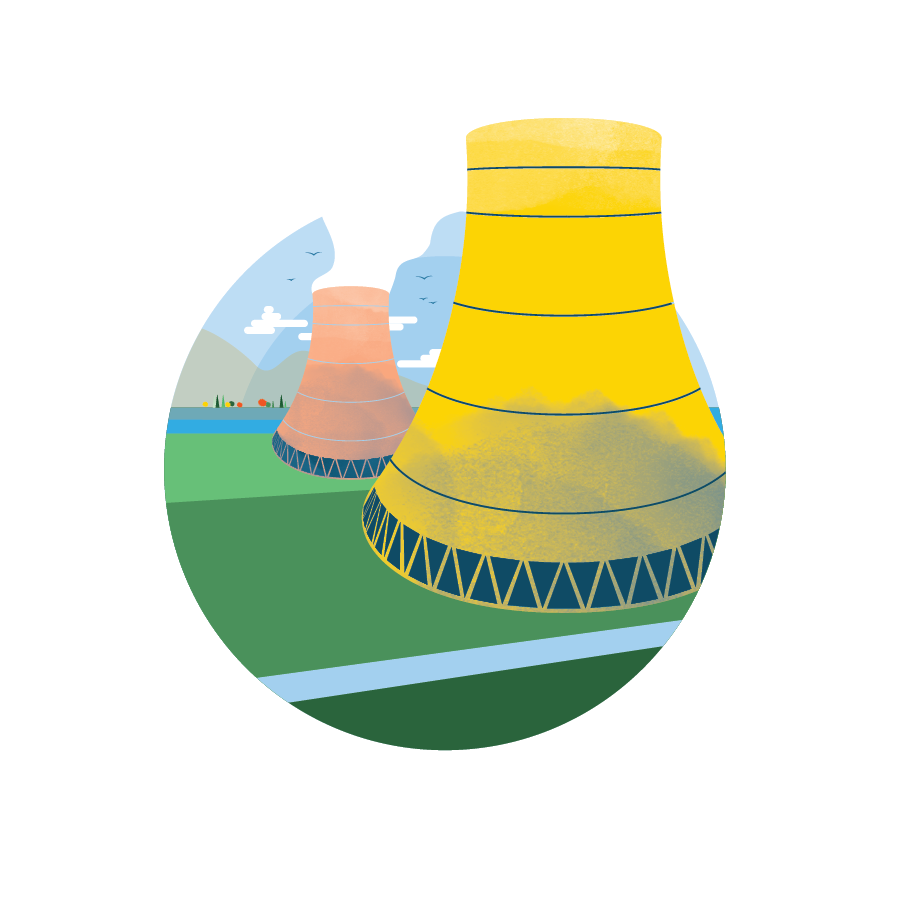
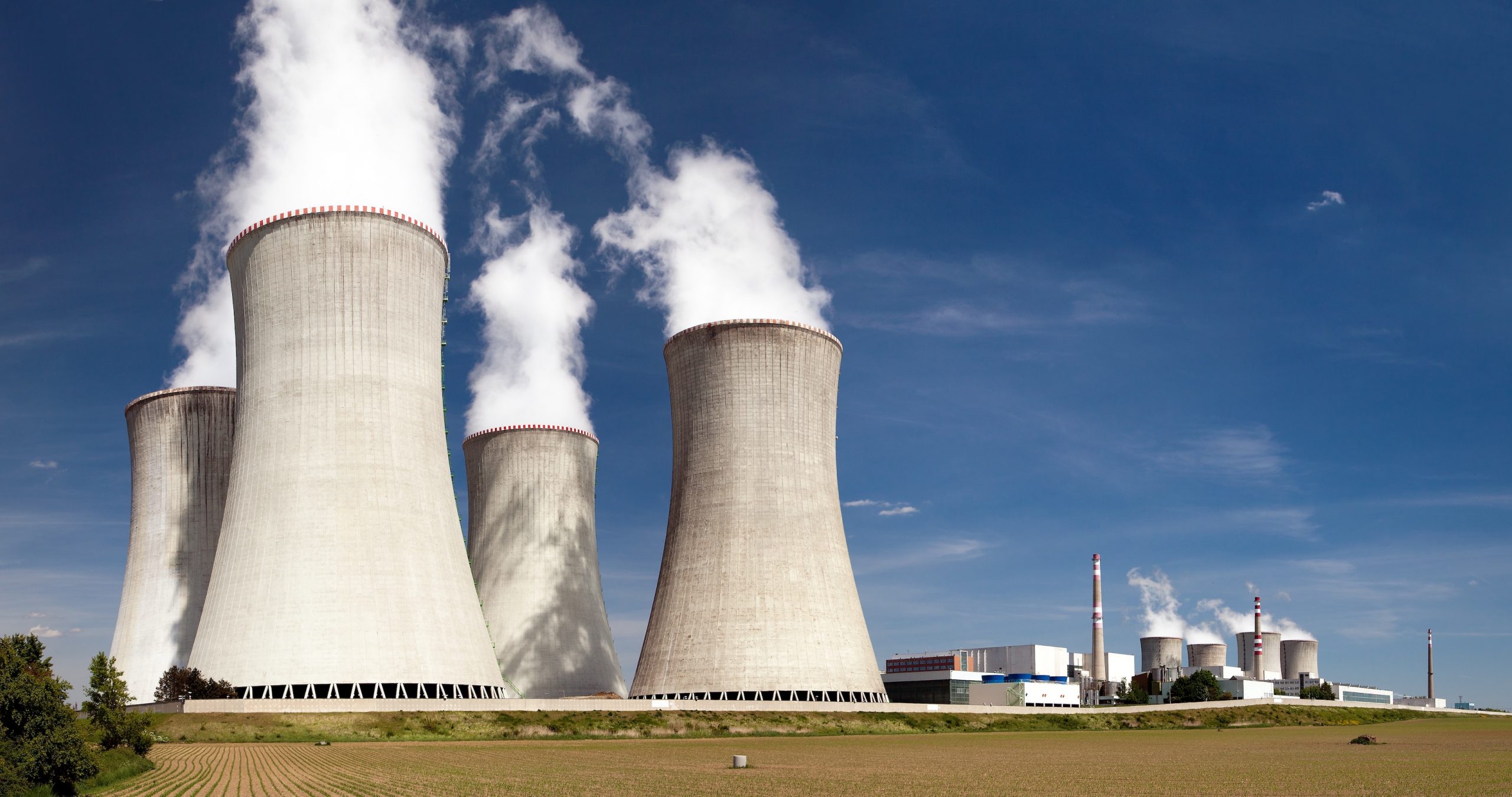
This reaction is controlled in nuclear power plant reactors to produce a desired amount of heat. The heat produced by fission is used to boil water into steam, which turns the blades of a steam turbine. As the turbine blades turn, they drive generators that make electricity. Afterward, the steam is cooled back into water in a separate structure at the power plant called a cooling tower.
Unlike fossil fuel-fired power plants, nuclear reactors do not produce air pollution or carbon dioxide while operating. However, the processes for mining and refining uranium ore and making reactor fuel require large amounts of energy.